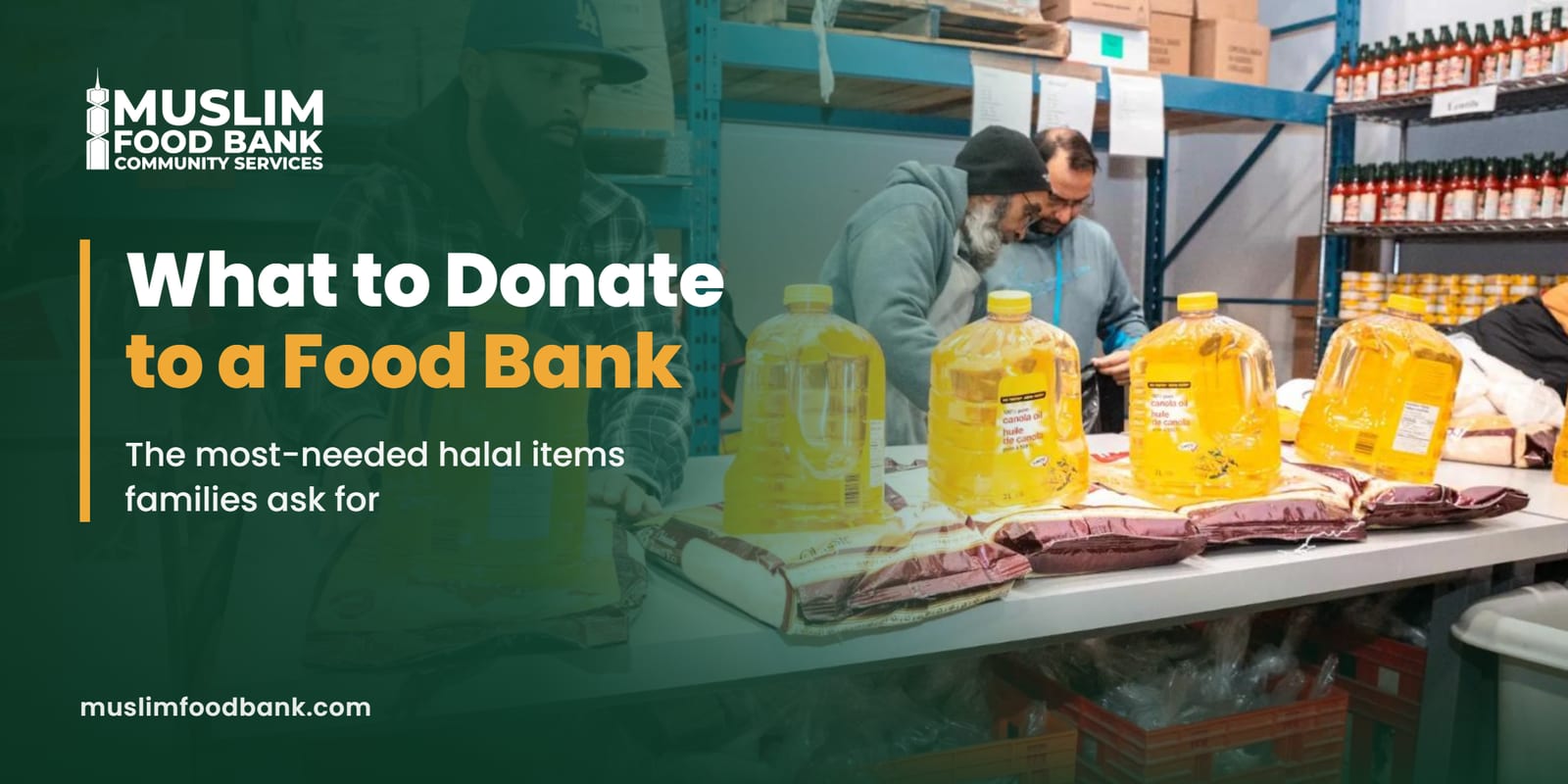
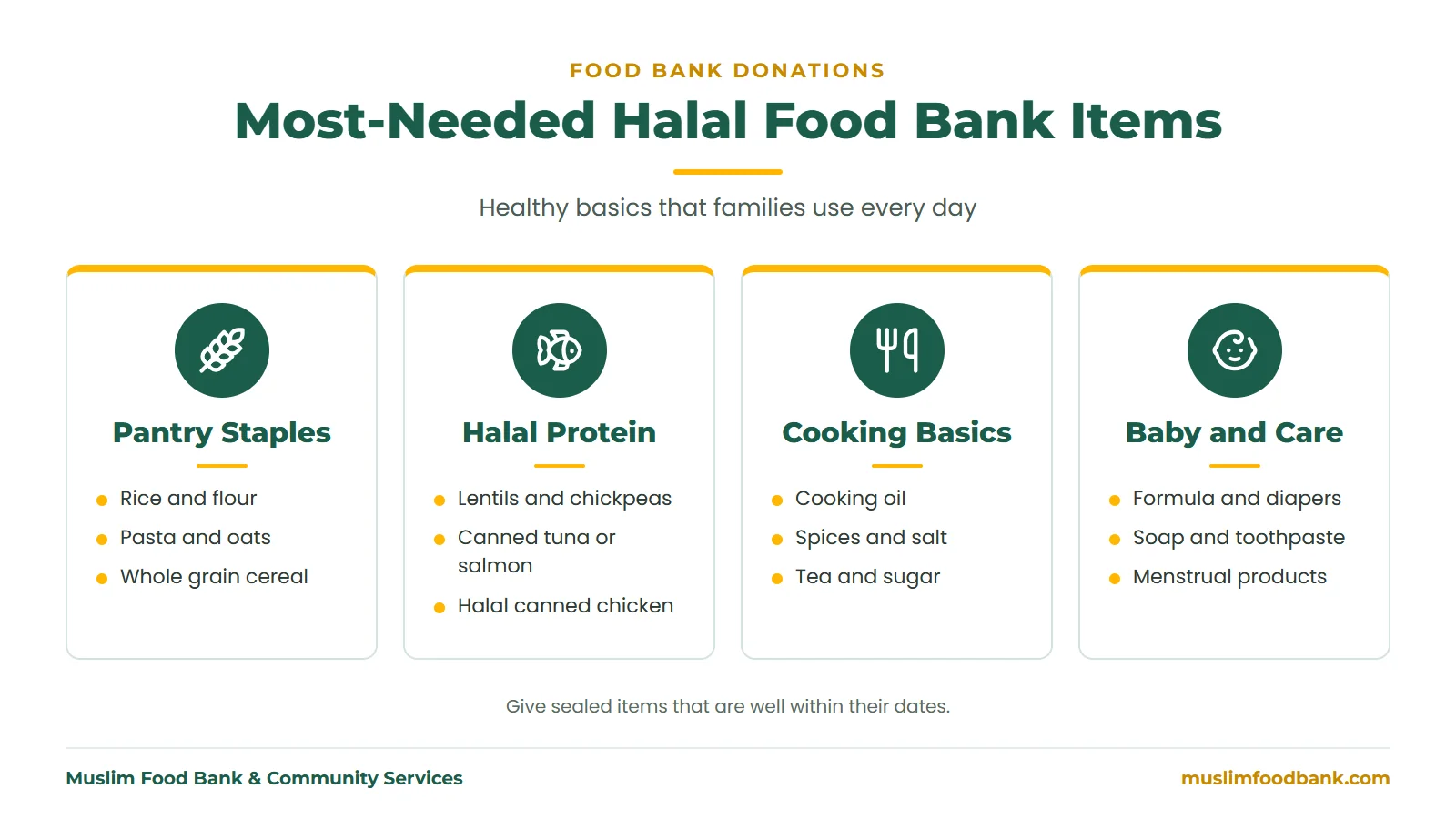
The best food bank donations are healthy, non-perishable foods that families use every day: rice, lentils, canned beans, halal canned fish or chicken, cooking oil, flour, cereal and baby formula. Check that items are unopened and not expired. If you can, give money too. It lets food banks buy fresh and halal food in bulk.
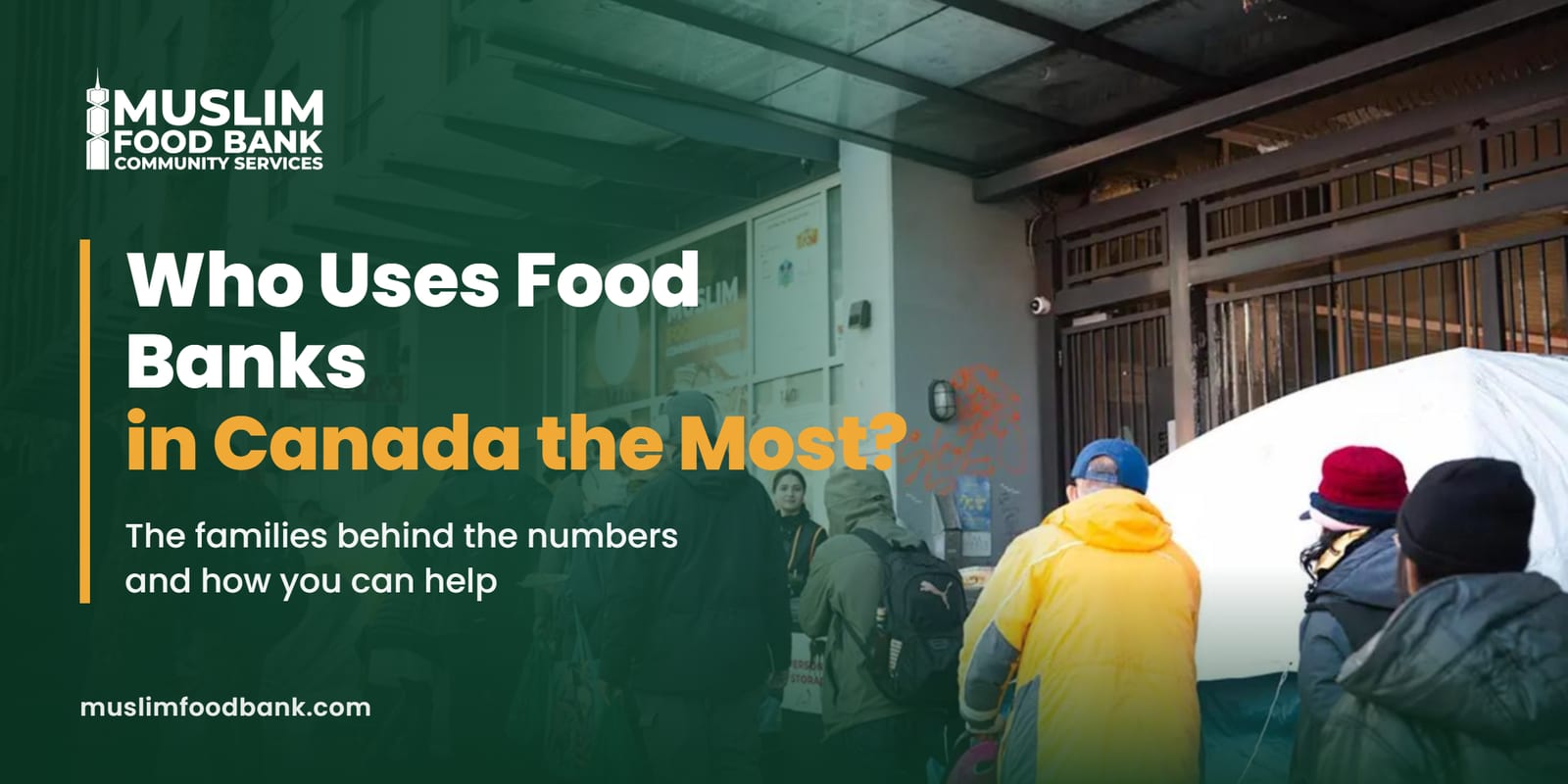
Food banks across Canada are seeing more visits than ever. Your donation, big or small, helps a family put a meal on the table with dignity.
This guide explains which food bank donations are most needed, which items to avoid, how to make sure food is halal, and why a cash gift often goes further. It is written for anyone planning a food drive, a family shop or a workplace collection.
What Are the Most Needed Food Bank Donations?
Food banks need the same basics that you keep in your own kitchen. Think of the foods that make a full, healthy meal. The table below lists the items that are almost always in demand.
| Type of food | Good examples | Tip |
|---|---|---|
| Grains | Rice, pasta, oats, flour, whole grain cereal | Large bags of rice and flour are very useful for families |
| Plant protein | Lentils, chickpeas, canned or dry beans, peanut butter | Naturally halal and long-lasting |
| Canned fish and meat | Tuna, salmon, sardines, halal chicken or beef | Meat must have a trusted halal certification |
| Vegetables and fruit | Canned tomatoes, mixed vegetables, fruit in juice | Choose low-sodium and no-sugar-added options |
| Cooking basics | Cooking oil, salt, spices, sugar, tea | Often forgotten, but needed for every meal |
| Baby food | Infant formula, baby cereal, jarred baby food | Must be sealed and well before the expiry date |
Food Banks Canada also publishes a list of most-needed items for food drives. Their list includes whole grains, lean proteins, canned fruit and milk alternatives, and they note that monetary donations are the best gift of all.
How to Make Sure Your Food Donation Is Halal
Many families who use Muslim Food Bank & Community Services (MFBCS) eat only halal food. Others follow a faith or culture with its own food rules. When a food item does not fit, it may go unused. Here is how to make your donation useful for everyone:
- Choose meat with halal certification. Canned chicken, beef or meat soups should carry a trusted halal symbol. If you are not sure, choose fish or plant protein instead.
- Check for gelatin. Gelatin is often made from pork. It can be found in some candies, marshmallows, yogurts and desserts.
- Watch for hidden meat. Some soups, broths and stock cubes contain chicken or beef that is not halal.
- Avoid alcohol and pork. Do not donate alcohol, or food with pork, bacon, ham or lard.
- When in doubt, keep it simple. Rice, lentils, beans, flour, oil, canned fish and vegetables are almost always halal and always welcome.
For more about why this matters, read our article on halal food bank donations.
What Not to Donate to a Food Bank
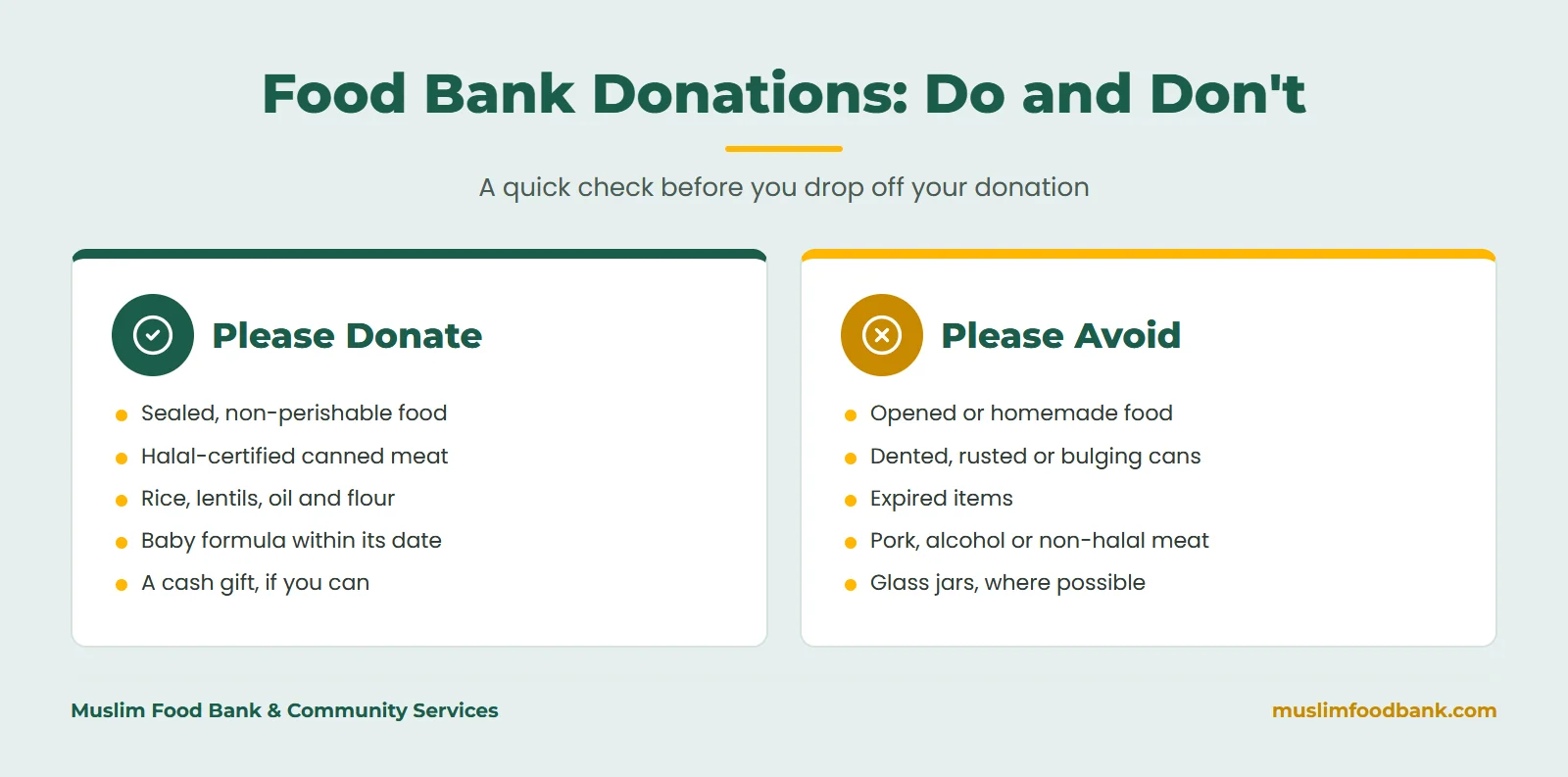
Most food banks cannot use everything they receive. Some items have to be thrown away, which costs volunteers time. Please do not donate:
- Opened or partly used packages, even if they look fine.
- Homemade or home-canned food. Food banks cannot check how it was made or stored.
- Cans that are badly dented, rusted, leaking or bulging.
- Food past its expiry date. Formula, baby food and some special foods have a true expiry date.
- Fresh or frozen food, unless the food bank has asked for it and can store it safely.
- Alcohol, or food containing pork or non-halal meat, if you are giving to a halal food bank.
- Items in glass jars, where possible. Glass can break when hampers are packed and carried.
What About Best-Before Dates?
A best-before date is about quality, not safety. According to the Canadian Food Inspection Agency, food past its best-before date may lose some freshness or flavour. Expiry dates are different, and are used on foods like infant formula. Each food bank has its own rules, so the safest choice is to give food that is well within its date. Families deserve food you would serve your own family.
Non-Food Items Food Banks Need
Hunger often comes with other needs. Families who cannot afford food usually struggle to buy other basics too. Useful non-food donations include:
- Baby essentials: diapers in all sizes, baby wipes and diaper cream
- Personal care: soap, shampoo, toothpaste, toothbrushes and deodorant
- Menstrual products: pads and tampons, which are often in short supply
- Household items: dish soap and laundry detergent
As with food, please give only new, sealed items.
Why Is Money the Best Food Bank Donation?
Food donations are always appreciated. But if you are deciding between buying groceries for a food bank or giving money, a cash donation often goes further. Food Banks Canada agrees. Here is why:
- Buying power. Food banks buy in bulk and from wholesalers, so each dollar buys more food than it would at a grocery store.
- Fresh and halal food. Money lets us buy fresh produce, dairy and halal meat, which are hard to collect through food drives.
- Filling the gaps. Donated food often includes too much of one item and not enough of another. Money lets us buy exactly what is missing.
- Less sorting. Volunteers can spend their time packing hampers and serving families, instead of checking dates and sorting mixed bags.
- Year-round help. Hunger does not stop after the holidays. A monthly gift keeps shelves stocked in every season.
A donation to MFBCS is also tax-receipted, and you can give your Zakat to help eligible families. See all the ways to give on our donation page.
Make Your Food Donation Go Further
A gift online helps us buy fresh and halal food in bulk for families across Canada. Every eligible donation receives a tax receipt.
How to Donate to a Muslim Food Bank Near You
Muslim Food Bank & Community Services provides halal food hampers at locations across Canada. There are a few ways to give.
Give Online
The fastest way to help is to donate online. Your gift helps us buy halal food for families in your community and across Canada. If you are paying Zakat, you can give it through our Zakat page.
Run a Food Drive
Food drives at a mosque, school or workplace are a great way to bring people together. Before you start, contact us or call 1-866-248-3868. We can tell you which items are needed most and how to drop them off. You can also run a “virtual” food drive, where people give money online instead of buying food. Businesses can read our guide on how local businesses can support food banks.
Give Your Time
Volunteers sort food, pack hampers and welcome families on distribution days. If you would like to help in person, learn how to volunteer with us.
Why Giving Food Matters in Islam
Feeding people in need is one of the most loved acts of charity in Islam. The Quran praises those who “give food in spite of love for it to the needy, the orphan, and the captive” (Quran 76:8). The next verse explains that they give only for the sake of Allah, wanting no reward or thanks from people (Quran 76:9).
Whether you give a bag of rice, a box of diapers or a monthly gift, your donation is a way to care for your neighbours and earn lasting reward.
Frequently Asked Questions About Food Bank Donations
What is the most needed item at food banks?
Money is often the most useful donation, because food banks can buy in bulk and fill exactly the gaps on their shelves. For food items, the most needed are healthy staples: rice, lentils, canned beans, canned fish, halal canned meat, peanut butter, cooking oil, flour, whole grain cereal and baby formula. Personal care items and diapers are also in high demand.
Can you donate expired food to a food bank?
Most food banks do not accept food past its expiry date, and many prefer food that is well within its best-before date. A best-before date is about quality, not safety, but each food bank sets its own rules. Infant formula and baby food must always be within their dates. When in doubt, give only food you would serve your own family.
Is it better to donate food or money to a food bank?
Both help, but money usually goes further. Food banks buy food in bulk at lower prices, so each dollar buys more than it would at a store. Money also pays for fresh produce and halal meat, which are hard to collect through food drives. A cash gift to a registered charity also earns an official tax receipt.
What should you not donate to a food bank?
Do not donate opened packages, homemade or home-canned food, damaged or bulging cans, or food past its expiry date. Avoid fresh or frozen food unless the food bank has asked for it. When giving to a halal food bank, do not donate alcohol, pork or meat without trusted halal certification, and check snacks for gelatin.
How do I know if a food donation is halal?
Look for a trusted halal certification symbol on any product with meat, such as canned chicken, beef or soup. Check the ingredients for gelatin, lard, alcohol and meat broths. Most plain staples are halal: rice, lentils, beans, flour, oil, canned fish, vegetables and fruit. If you are unsure about a product, choose a simple staple instead.
Can I donate my Zakat as food?
Zakat is usually given as money, which a trusted charity then uses to meet the needs of eligible recipients, including food. At Muslim Food Bank & Community Services, you can give your Zakat online and we use it for eligible families. Scholars differ on some details of giving Zakat in kind, so ask a local scholar about your situation. Learn more on our Zakat page.
Conclusion
The best food bank donations are simple, healthy and useful: rice, lentils, beans, canned fish, halal canned meat, oil, flour, cereal, baby formula and personal care items. Give only sealed food that is well within its date, and avoid pork, alcohol and non-halal meat when giving to a halal food bank.
If you can, consider giving money as well. It lets food banks buy fresh and halal food in bulk and fill the gaps on their shelves. Every donation helps a family in need eat with dignity.