
Sadaqa (also spelled sadaqah) is voluntary charity given for the sake of Allah. The word comes from the Arabic root s-d-q, linked to sidq, truthfulness, because giving shows that your faith is real. Sadaqa has no set amount or time, and it isn’t only money: a kind word, a smile or a helping hand also count.
Unlike Zakat, which is required once a year from those who qualify, sadaqa is open to everyone, every day. A child can give it, a student can give it, and someone with nothing in their wallet can still give it.
This guide explains the sadaqah meaning, what counts as sadaqa, its main types, how it differs from Zakat, its benefits in this life and the next, and how to give it well.
What Does Sadaqah Mean?
In Arabic, sadaqah (صَدَقَة) shares its root with sidq (truthfulness) and sadiq (a true friend). Scholars explain the link this way: when you give away something you love for Allah’s sake, you prove that your faith is true. Your actions match your words.
In the Quran, the plural sadaqat sometimes means the required Zakat. For example, the verse listing who can receive Zakat begins “Zakah expenditures are only for the poor and for the needy…” and uses the word sadaqat (Quran 9:60). In everyday use today, though, “sadaqah” means voluntary charity, and “Zakat” means the required one. That is how we use the words in this article.
What Counts as Sadaqa?
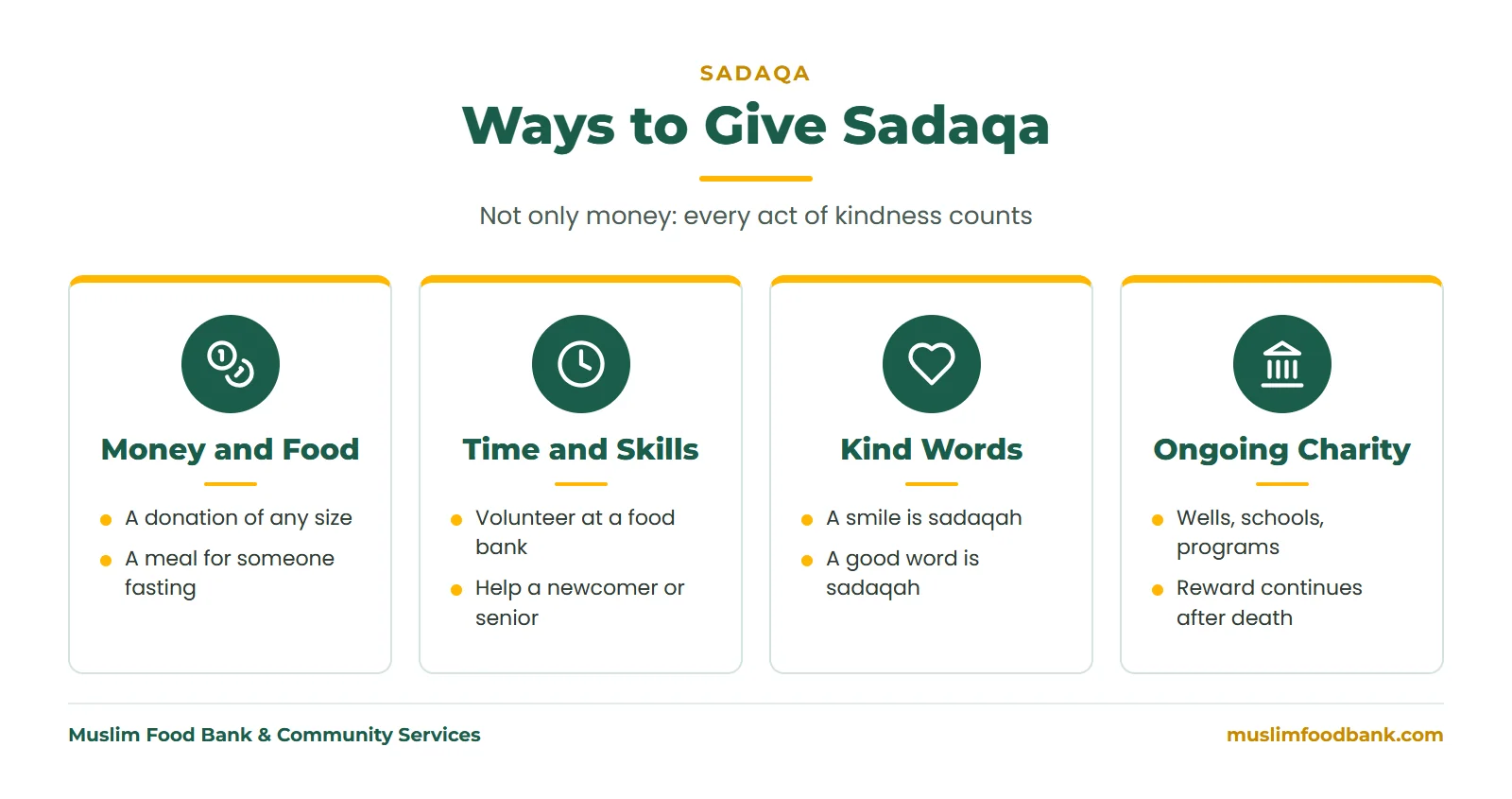
Money and food are the most common forms, but the Prophet Muhammad (peace be upon him) taught that sadaqa is much wider. He said, “Every act of kindness is sadaqah” (Sahih al-Bukhari 6021). Other authentic hadith name everyday examples:
- A good word is sadaqah (Sahih al-Bukhari 2989).
- Smiling at your brother or sister is sadaqah (Jami’ at-Tirmidhi 1956).
- Removing something harmful from the road is sadaqah (Sahih al-Bukhari 2989).
- Helping someone in need who asks for help is sadaqah (Sahih al-Bukhari 1445).
- Spending on your own family, hoping for Allah’s reward, is sadaqah (Sahih al-Bukhari 55).
- Kindness to animals brings reward: a man who gave water to a thirsty dog was forgiven (Sahih al-Bukhari 2363).
The Prophet (peace be upon him) even said that every Muslim should give sadaqah. When people asked what someone with nothing should do, he said they should work and give, help a person in need, do good and hold back from harm, and that would be sadaqah for them (Sahih al-Bukhari 1445). No one is too poor to give something.
What Are the Types of Sadaqa?
Everyday Sadaqa
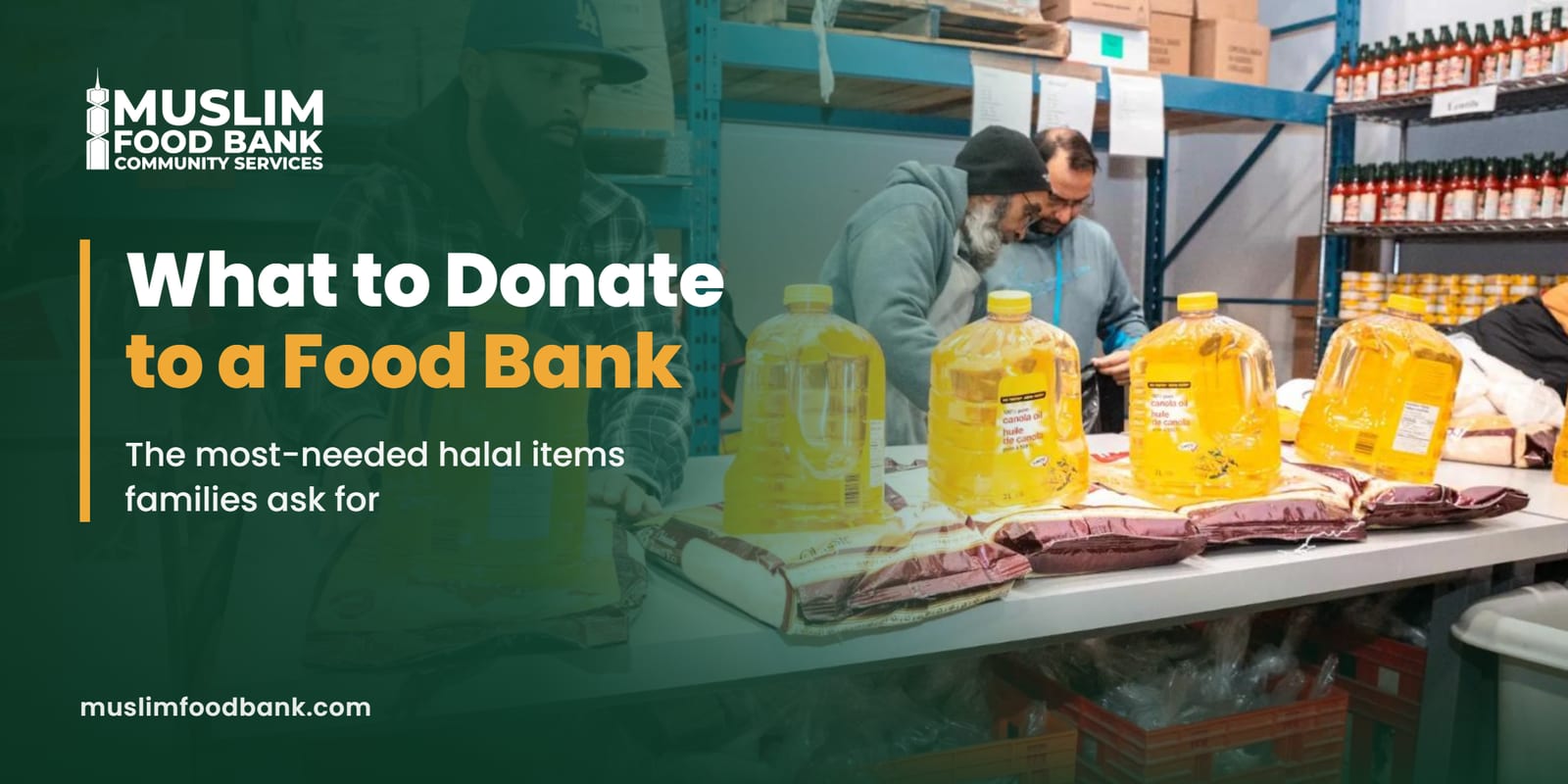
This is the giving you do as you go: a donation to a food bank, groceries for a neighbour, a meal for someone who is fasting, time spent volunteering. It can be big or small, planned or on the spot.
Sadaqah Jariyah (Ongoing Charity)
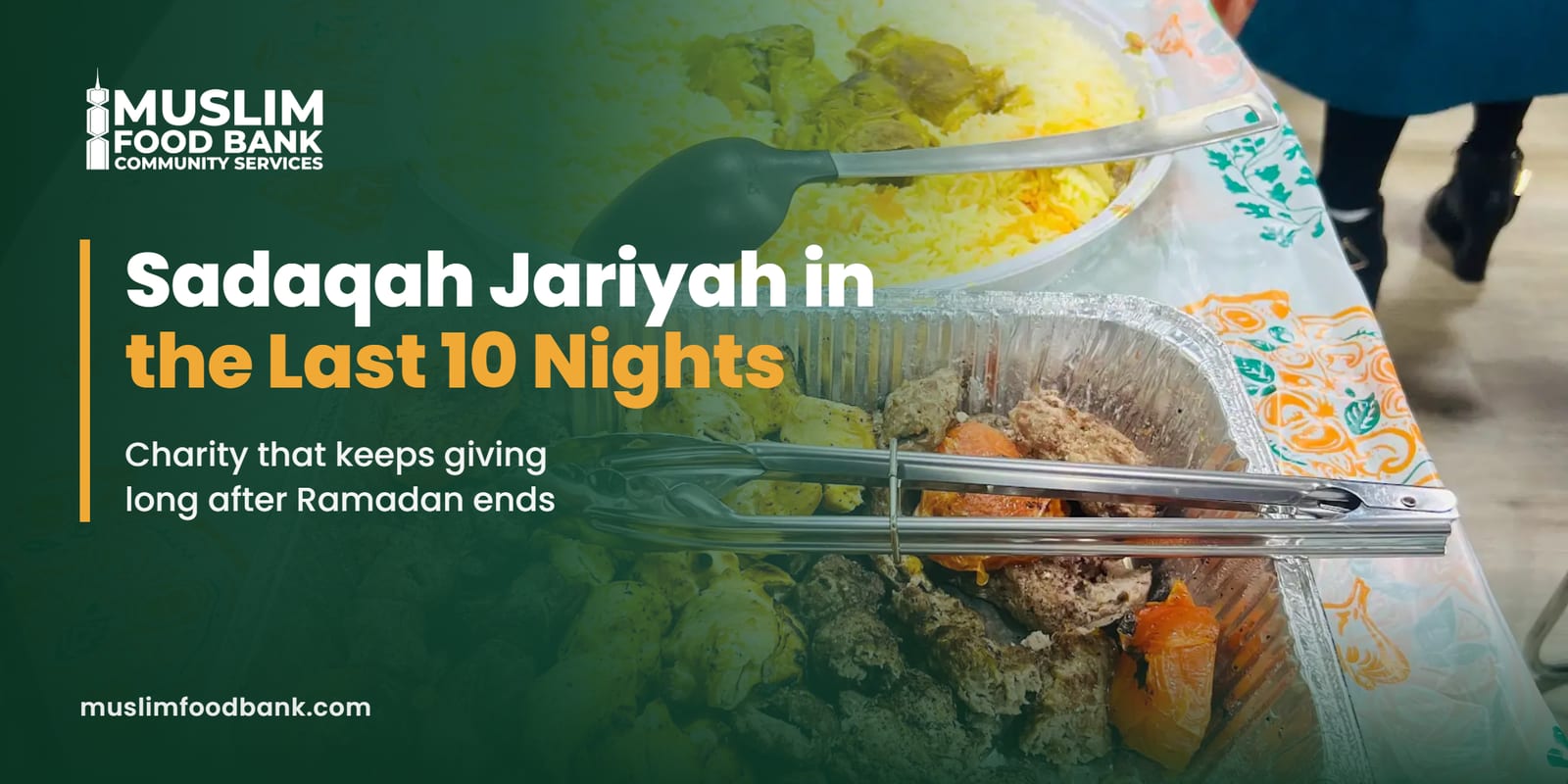
Sadaqah jariyah keeps helping people long after you give it, and its reward keeps reaching you even after you die. The Prophet (peace be upon him) said that when a person dies, their deeds end except three: ongoing charity, knowledge that benefits others, and a righteous child who prays for them (Sahih Muslim 1631). Wells, schools, mosques, copies of the Quran and programs that help people stand on their own are common examples. Read more about sadaqah jariyah in the last 10 nights of Ramadan.
Sadaqa of Time and Skills
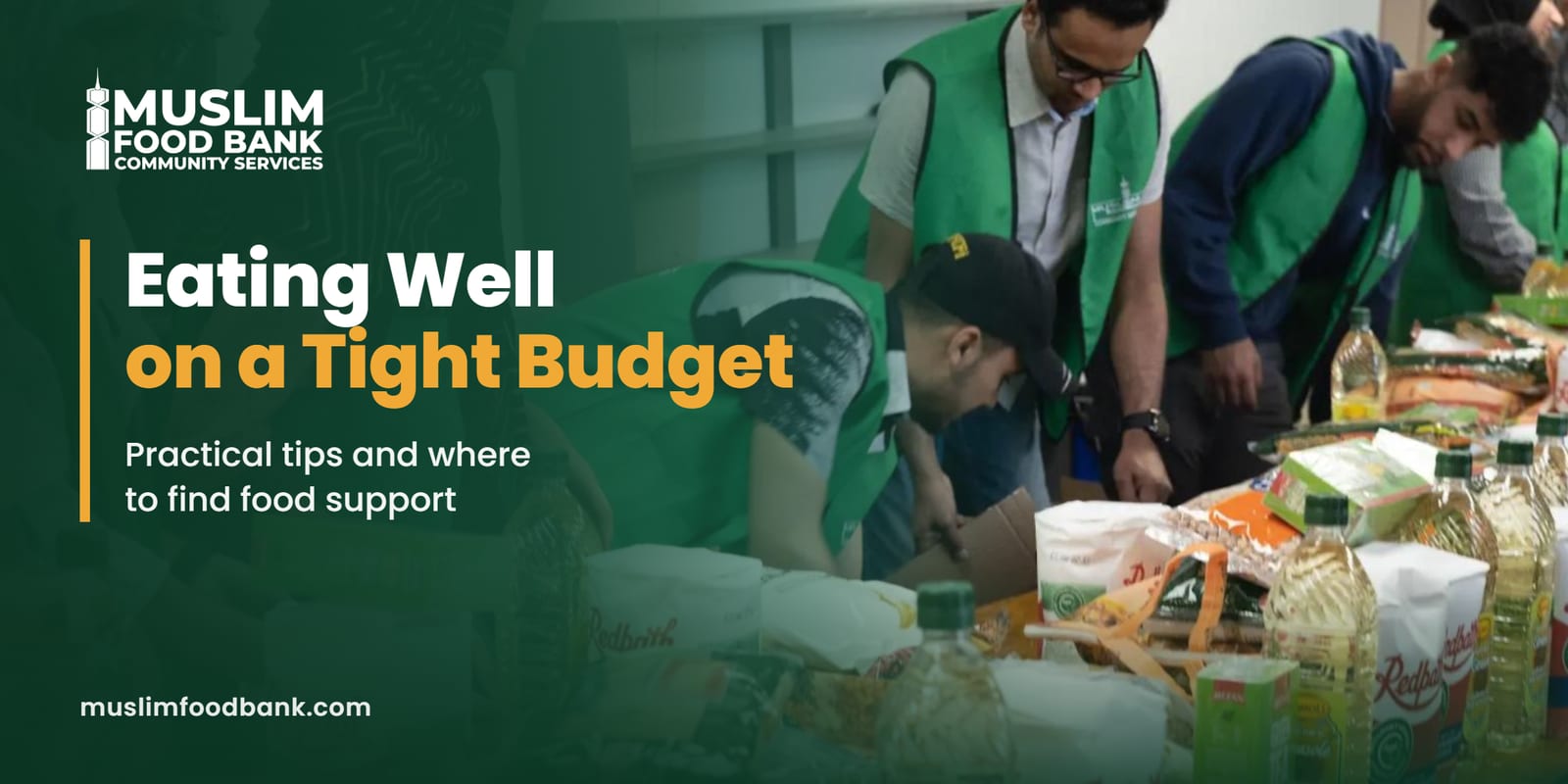
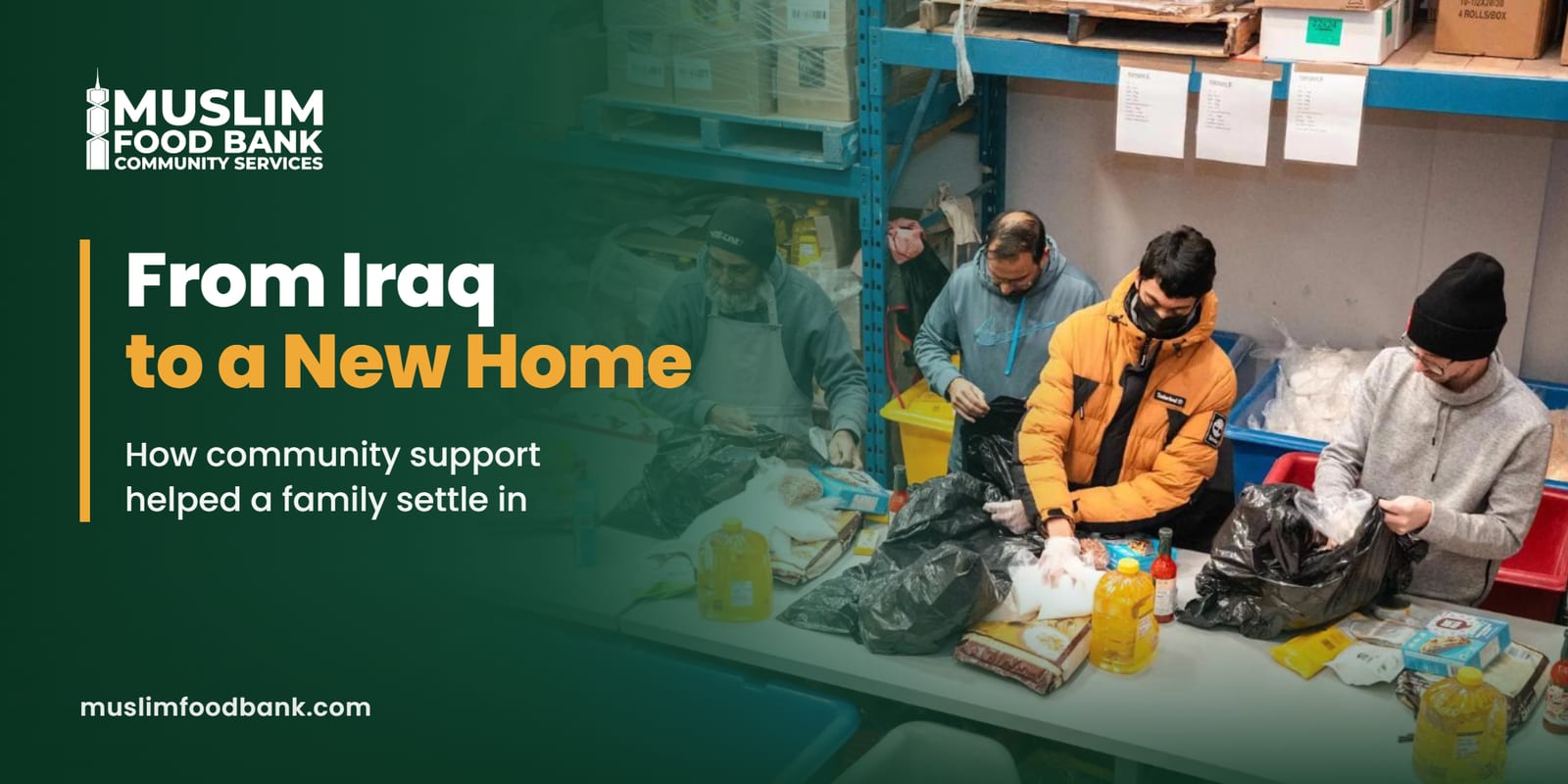
Your time and skills can be sadaqa too. Driving a senior to an appointment, translating a letter for a newcomer family, tutoring a child or packing food hampers for a few hours are all ways to give. For many people, especially students and retirees, this is the sadaqa they can give most often. Helping someone with what they need, when they ask, is exactly what the Prophet (peace be upon him) described as sadaqah.
Sadaqa on Behalf of Someone Else
You can give sadaqa for a parent, grandparent or friend who has passed away. A man told the Prophet (peace be upon him) that his mother had died suddenly and asked if she would be rewarded if he gave charity for her. The Prophet said yes (Sahih al-Bukhari 1388).
Secret and Open Sadaqa
Both are good. The Quran says giving openly is good, but giving secretly to the poor is better for you, and it removes some of your sins (Quran 2:271). Giving openly can encourage others; giving secretly protects your sincerity and the dignity of the person you help.
What Is the Difference Between Sadaqa and Zakat?
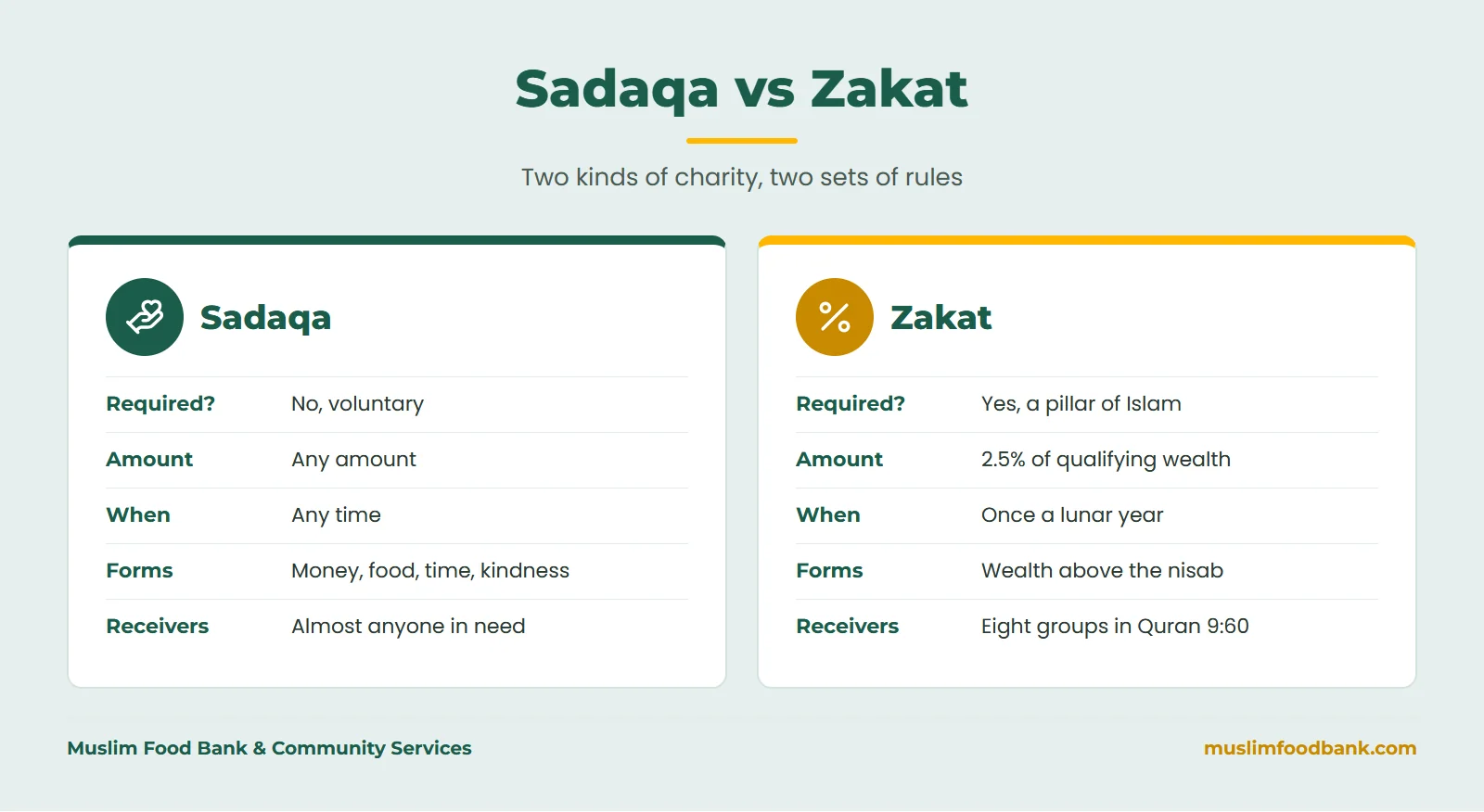
Both are charity, and both are worship. The main difference is that Zakat is a required pillar of Islam with set rules, while sadaqa is voluntary and flexible.
| Sadaqa (voluntary) | Zakat (required) | |
|---|---|---|
| Required? | No, but strongly encouraged | Yes, one of the five pillars of Islam |
| Who gives | Anyone | Adult Muslims whose savings stay above the nisab for one lunar year |
| Amount | Any amount | 2.5% of qualifying wealth |
| When | Any time | Once a lunar year, when it is due |
| Forms | Money, food, time, a kind word, a smile | Wealth (money, gold, silver, trade goods and similar) |
| Who can receive | Almost anyone, best to those in need | Only the eight groups in Quran 9:60 |
To learn who can receive each one, read who is eligible for sadaqah. For the rules of the required charity, see our Zakat page.
What Are the Benefits of Sadaqa?
Sadaqa helps the person who receives it, but the Quran and Sunnah make clear that the giver benefits just as much.
1. It Purifies Your Wealth and Your Heart
Allah told the Prophet (peace be upon him) to take charity from people’s wealth “by which you purify them and cause them increase” (Quran 9:103). Giving loosens the hold that money has on the heart and guards against greed.
2. It Does Not Decrease Your Wealth
The Prophet (peace be upon him) said, “Charity does not decrease wealth” (Sahih Muslim 2588). What you give is never really lost. Allah replaces it with blessing (barakah) in what remains, and with reward that lasts.
3. It Wipes Away Sins
The Prophet (peace be upon him) said that charity puts out sin the way water puts out fire (Jami’ at-Tirmidhi 2616). The Quran also says Allah will forgive those who lend Him a goodly loan (Quran 64:17).
4. It Protects You From the Fire
“Protect yourself from the Fire, even with half a date given in charity,” the Prophet (peace be upon him) said (Sahih al-Bukhari 1417). Even the smallest gift matters.
5. Its Reward Is Multiplied
Spending in Allah’s way is like a seed that grows seven ears, with a hundred grains in each, and Allah multiplies even more for whom He wills (Quran 2:261).
6. It Builds Stronger Communities
Sadaqa closes the gap between people who have and people who need. It turns neighbours into family. The Quran describes the righteous as those in whose wealth there is a known share for those who ask and those who are deprived (Quran 70:24–25).
7. It Keeps Giving After You Die
Through sadaqah jariyah, your good deeds can continue long after your life ends (Sahih Muslim 1631).
For more on why giving matters so much in Islam, read charity in Islam.
How Should You Give Sadaqa?
The Quran and Sunnah also teach how to give, so that your sadaqa is accepted and the person you help keeps their dignity.
- Give for Allah alone. The Quran describes those who say, “We feed you only for the countenance of Allah. We wish not from you reward or gratitude” (Quran 76:9).
- Give from good, lawful earnings. Don’t give what you wouldn’t accept yourself (Quran 2:267).
- Don’t remind people of your favour. Reminders and hurtful words cancel the reward of charity (Quran 2:262–264).
- Start with those closest to you. The Prophet (peace be upon him) said to begin with those you support (Sahih al-Bukhari 1427).
- Give regularly, even if small. The deeds Allah loves most are the regular ones, even if they are small (Sahih al-Bukhari 6464).
- Don’t wait. The best charity is given while you are healthy and still worry about money, not left until the end of your life (Sahih al-Bukhari 1419).
How Can You Give Sadaqa in Canada?
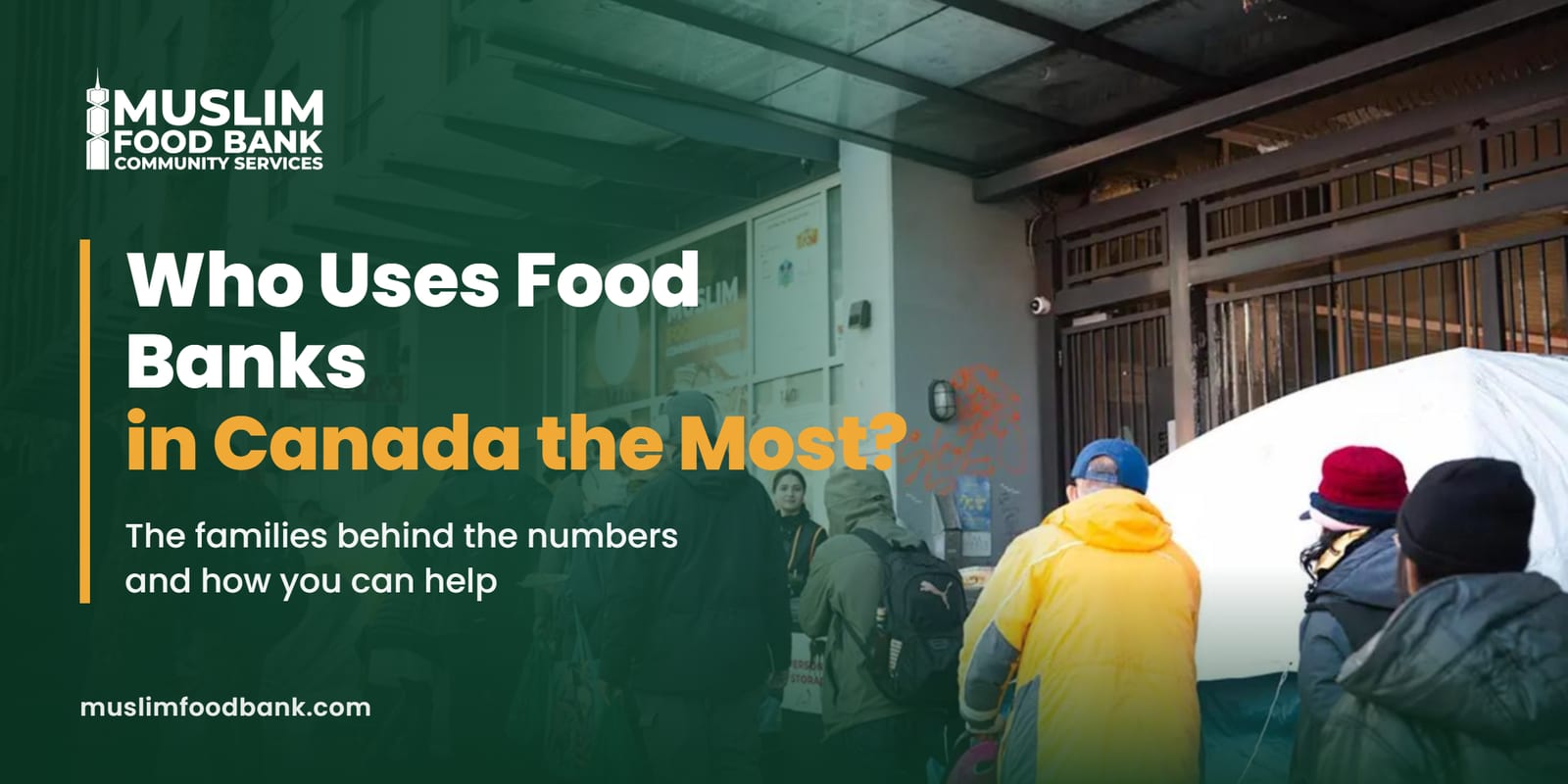
There is real need close to home. People in Canada made a record 2.35 million visits to food banks in March 2026, according to Food Banks Canada’s HungerCount (2026).
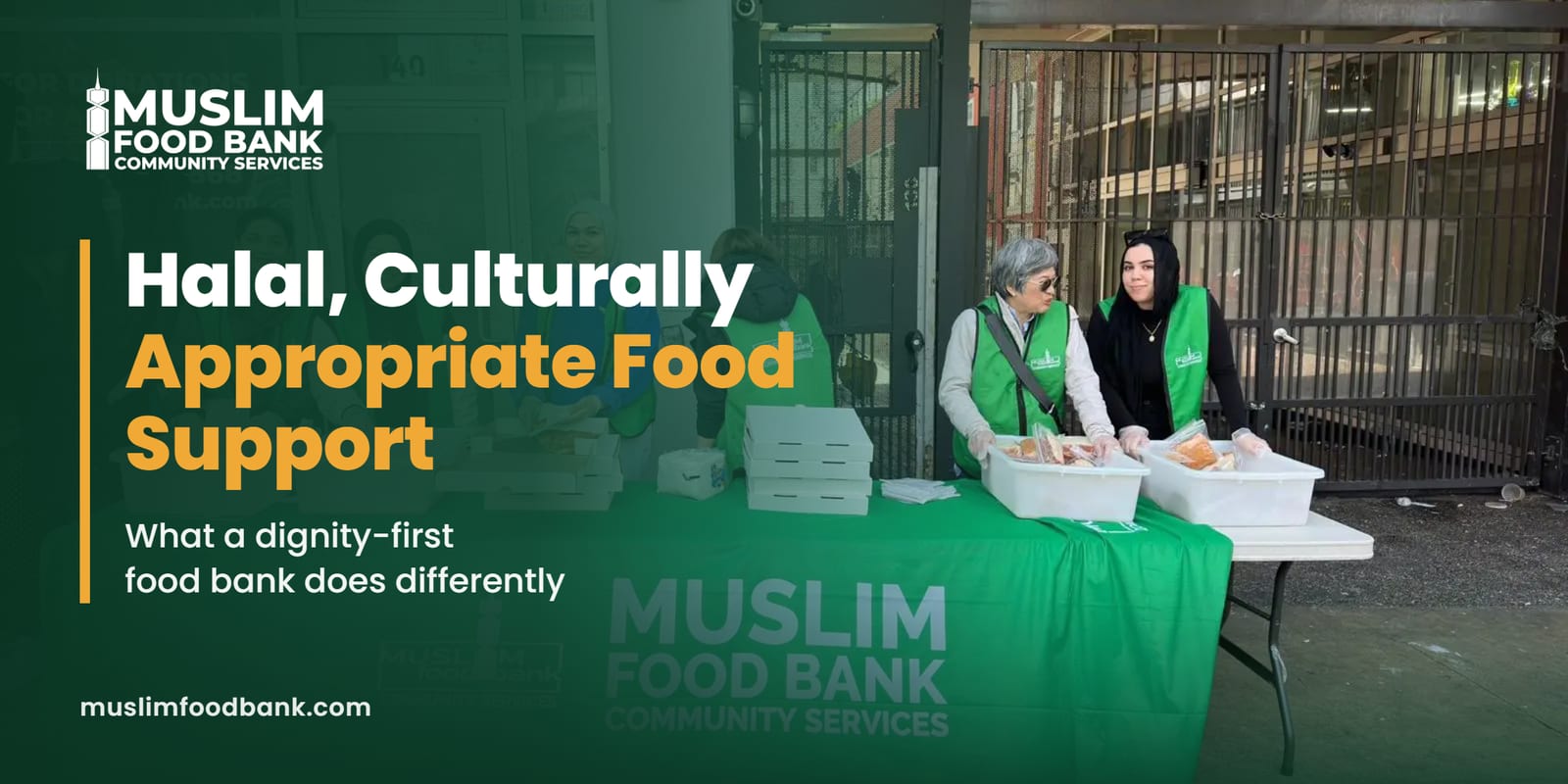
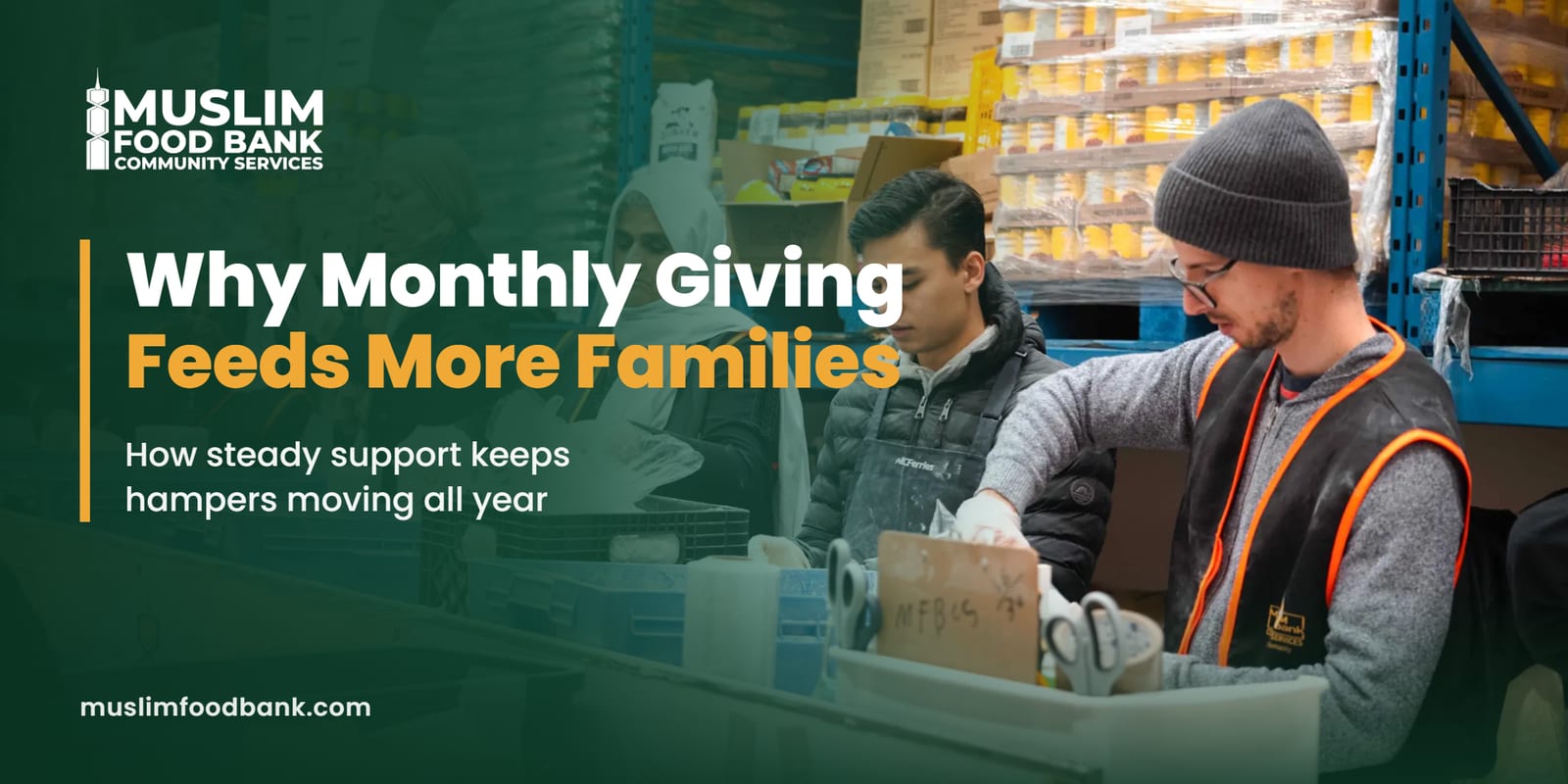
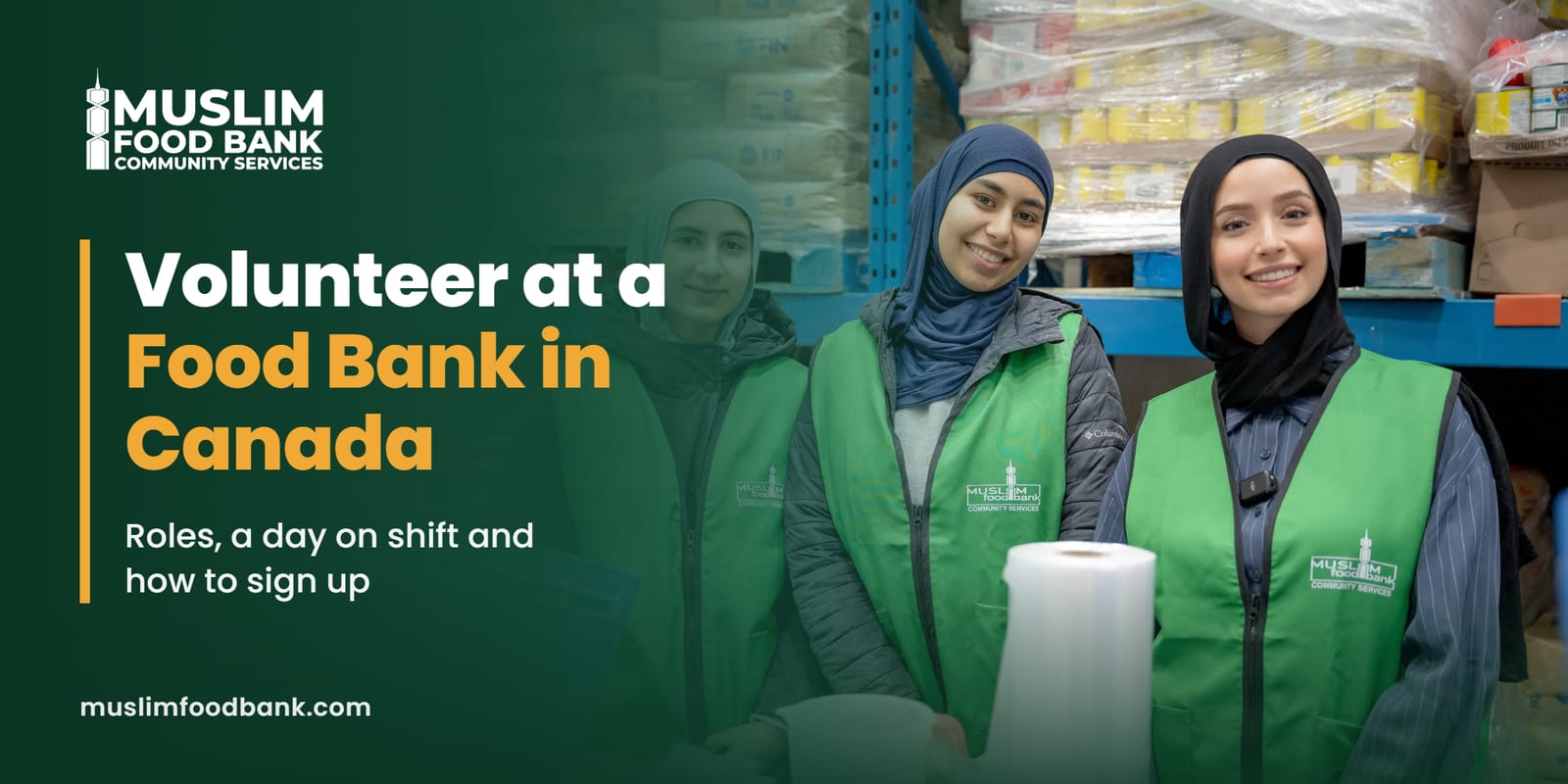
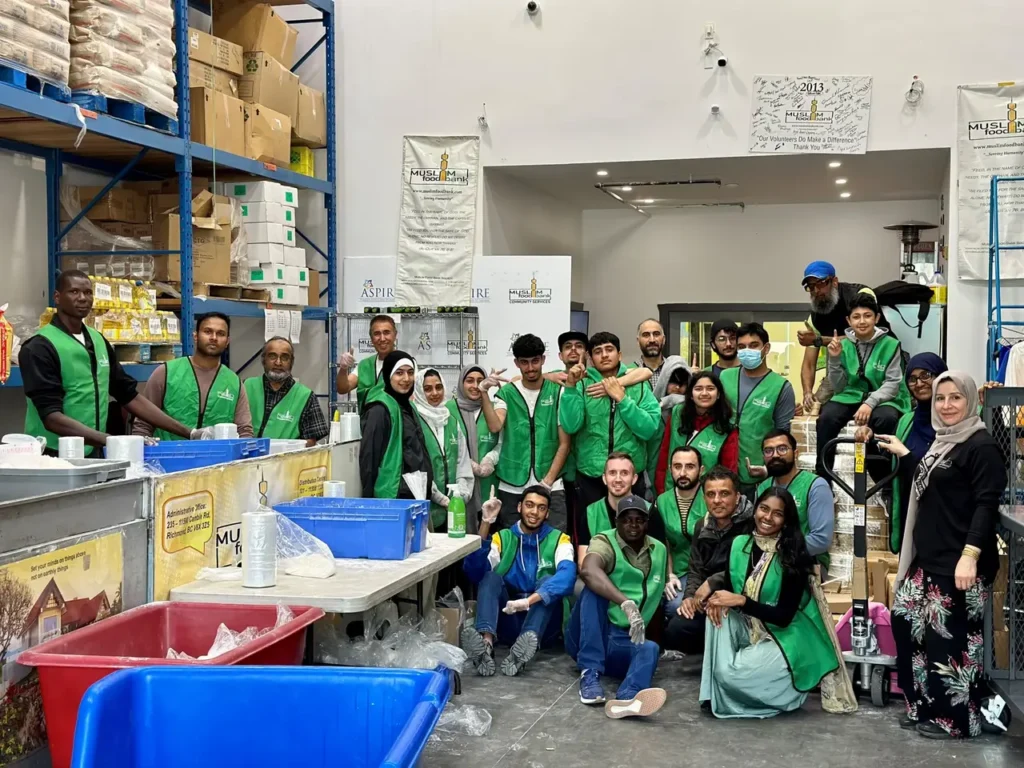
At Muslim Food Bank & Community Services, your sadaqa becomes halal food hampers for families, meals for people experiencing homelessness, and support for newcomers, refugees, seniors and youth at our locations across Canada. You can give once or monthly on our Sadaqah page. If you would rather give your time, volunteer with us: packing a hamper is sadaqa too.
Give Sadaqa That Feeds Families
Your sadaqa becomes halal food hampers and support for families across Canada. Give once, or make it monthly so your kindness never stops.
Frequently Asked Questions About Sadaqa
What is the meaning of sadaqa?
Sadaqa (sadaqah) means voluntary charity given for the sake of Allah. The word comes from the Arabic root s-d-q, linked to sidq, meaning truthfulness, because giving proves your faith is sincere. Sadaqa has no set amount or time. It includes money and food, but also kind words, a smile, your time and any good deed done for Allah.
Is a smile really sadaqa?
Yes. The Prophet (peace be upon him) said that smiling at your brother is charity, along with other small acts like guiding someone who is lost and removing harm from the road (Jami’ at-Tirmidhi 1956). He also said every act of kindness is sadaqah (Sahih al-Bukhari 6021). So even someone with no money can give sadaqa every day.
What is the difference between sadaqa and Zakat?
Zakat is a required pillar of Islam: 2.5% of savings held above the nisab for a lunar year, given only to the eight groups in Quran 9:60. Sadaqa is voluntary. It has no minimum, can be given any time and in any form, and can go to almost anyone, though people in need come first.
What is sadaqah jariyah?
Sadaqah jariyah is ongoing charity that keeps helping people after you give it, so its reward keeps reaching you, even after death. The Prophet (peace be upon him) named it as one of three deeds that continue after a person dies (Sahih Muslim 1631). Examples include wells, schools, mosques and programs that help people stand on their own.
Can I give sadaqa on behalf of someone who has died?
Yes. A man told the Prophet (peace be upon him) that his mother had died suddenly and asked if she would be rewarded if he gave charity for her, and the Prophet said yes (Sahih al-Bukhari 1388). Many families give sadaqa for parents and grandparents who have passed away, often as sadaqah jariyah.
How much sadaqa should I give?
There is no set amount. Give what you can, without harming yourself or the people you support. The Prophet (peace be upon him) said the deeds Allah loves most are the regular ones, even if small (Sahih al-Bukhari 6464). A small monthly gift you keep up can be better than one large gift you never repeat.
Should sadaqa be given in secret?
Both secret and open giving are good. The Quran says giving openly is fine, but giving secretly to the poor is better for you and removes some of your sins (Quran 2:271). Secret giving protects your sincerity and the dignity of the person you help. Open giving can encourage others to give too.
Conclusion
Sadaqa is one of the simplest and most beautiful parts of Islam. It is open to everyone, it has no minimum, and it reaches far beyond money. A smile, a meal, an hour of your time or a monthly donation can all be sadaqa when you give them for Allah. Start small, give often, and trust that nothing you give is ever lost.