The 99 Names of Allah, called Asma ul Husna (“the most beautiful names”), are the names Allah uses to describe Himself in the Quran and Sunnah. Each name, such as Ar-Rahman (the Most Gracious) and Ar-Razzaq (the Provider), shows one of His perfect qualities. Muslims learn them to know Allah, call on Him in dua and live by their meaning.
Below you will find the full list of the 99 Names of Allah with the Arabic, an easy transliteration and the English meaning. We also explain where the list comes from, what the names teach us, and simple ways to learn them with your family.
Take your time with this page. Even learning one name a day, and thinking about what it means for your life, is a beautiful act of worship.
What Are the 99 Names of Allah?
The Quran tells us that Allah has the most beautiful names, and it asks us to call on Him by them: “And to Allah belong the best names, so invoke Him by them” (Quran 7:180). The same phrase, al-asma al-husna, appears in other places too (Quran 17:110, 20:8 and 59:24).
The Prophet Muhammad (peace be upon him) taught that Allah has ninety-nine names, one hundred less one, and that whoever “counts” them (ahsaha) will enter Paradise. This hadith is reported in Sahih al-Bukhari 7392 and Sahih Muslim 2677.
What Does “Counting” the Names Mean?
Scholars explain that “counting” the names means more than reciting a list. It includes:
- Learning them: memorizing the names and how to say them.
- Understanding them: knowing what each name means and what it tells us about Allah.
- Calling on Allah by them: using the names in dua and dhikr.
- Living by them: letting the names shape how we act, for example showing mercy because Allah is Ar-Rahman.
The Full List of the 99 Names of Allah With Meanings
This is the list most Muslims learn. The meanings are short English summaries. No single English word can hold the full meaning of a name of Allah, so we sometimes give two.
| # | Arabic | Transliteration | English meaning |
|---|---|---|---|
| 1 | الرَّحْمَنُ | Ar-Rahman | The Most Gracious |
| 2 | الرَّحِيمُ | Ar-Raheem | The Most Merciful |
| 3 | الْمَلِكُ | Al-Malik | The King |
| 4 | الْقُدُّوسُ | Al-Quddus | The Most Holy |
| 5 | السَّلاَمُ | As-Salam | The Source of Peace |
| 6 | الْمُؤْمِنُ | Al-Mu’min | The Giver of Faith and Security |
| 7 | الْمُهَيْمِنُ | Al-Muhaymin | The Ever-Watchful Guardian |
| 8 | الْعَزِيزُ | Al-Aziz | The Almighty |
| 9 | الْجَبَّارُ | Al-Jabbar | The Compeller, The Restorer |
| 10 | الْمُتَكَبِّرُ | Al-Mutakabbir | The Supreme in Greatness |
| 11 | الْخَالِقُ | Al-Khaliq | The Creator |
| 12 | الْبَارِئُ | Al-Bari’ | The Maker |
| 13 | الْمُصَوِّرُ | Al-Musawwir | The Fashioner |
| 14 | الْغَفَّارُ | Al-Ghaffar | The Ever-Forgiving |
| 15 | الْقَهَّارُ | Al-Qahhar | The All-Prevailing |
| 16 | الْوَهَّابُ | Al-Wahhab | The Giver of Gifts |
| 17 | الرَّزَّاقُ | Ar-Razzaq | The Provider |
| 18 | الْفَتَّاحُ | Al-Fattah | The Opener |
| 19 | الْعَلِيمُ | Al-Aleem | The All-Knowing |
| 20 | الْقَابِضُ | Al-Qabid | The One Who Withholds |
| 21 | الْبَاسِطُ | Al-Basit | The One Who Extends |
| 22 | الْخَافِضُ | Al-Khafid | The One Who Lowers |
| 23 | الرَّافِعُ | Ar-Rafi’ | The One Who Raises |
| 24 | الْمُعِزُّ | Al-Mu’izz | The Giver of Honour |
| 25 | الْمُذِلُّ | Al-Mudhill | The One Who Humbles |
| 26 | السَّمِيعُ | As-Sami’ | The All-Hearing |
| 27 | الْبَصِيرُ | Al-Basir | The All-Seeing |
| 28 | الْحَكَمُ | Al-Hakam | The Judge |
| 29 | الْعَدْلُ | Al-Adl | The Just |
| 30 | اللَّطِيفُ | Al-Latif | The Most Gentle, The Subtle |
| 31 | الْخَبِيرُ | Al-Khabir | The All-Aware |
| 32 | الْحَلِيمُ | Al-Halim | The Forbearing |
| 33 | الْعَظِيمُ | Al-Azim | The Magnificent |
| 34 | الْغَفُورُ | Al-Ghafur | The All-Forgiving |
| 35 | الشَّكُورُ | Ash-Shakur | The Most Appreciative |
| 36 | الْعَلِيُّ | Al-Aliyy | The Most High |
| 37 | الْكَبِيرُ | Al-Kabir | The Most Great |
| 38 | الْحَفِيظُ | Al-Hafiz | The Preserver, The Protector |
| 39 | الْمُقِيتُ | Al-Muqit | The Nourisher |
| 40 | الْحَسِيبُ | Al-Hasib | The Reckoner |
| 41 | الْجَلِيلُ | Al-Jalil | The Majestic |
| 42 | الْكَرِيمُ | Al-Karim | The Most Generous |
| 43 | الرَّقِيبُ | Ar-Raqib | The Ever-Watchful |
| 44 | الْمُجِيبُ | Al-Mujib | The One Who Answers |
| 45 | الْوَاسِعُ | Al-Wasi’ | The All-Encompassing |
| 46 | الْحَكِيمُ | Al-Hakim | The Wise |
| 47 | الْوَدُودُ | Al-Wadud | The Most Loving |
| 48 | الْمَجِيدُ | Al-Majeed | The Most Glorious |
| 49 | الْبَاعِثُ | Al-Ba’ith | The Resurrector |
| 50 | الشَّهِيدُ | Ash-Shahid | The Witness |
| 51 | الْحَقُّ | Al-Haqq | The Truth |
| 52 | الْوَكِيلُ | Al-Wakil | The Trustee, The Disposer of Affairs |
| 53 | الْقَوِيُّ | Al-Qawiyy | The All-Strong |
| 54 | الْمَتِينُ | Al-Matin | The Firm |
| 55 | الْوَلِيُّ | Al-Waliyy | The Protecting Friend |
| 56 | الْحَمِيدُ | Al-Hamid | The Praiseworthy |
| 57 | الْمُحْصِي | Al-Muhsi | The One Who Counts All Things |
| 58 | الْمُبْدِئُ | Al-Mubdi’ | The One Who Begins Creation |
| 59 | الْمُعِيدُ | Al-Mu’id | The One Who Brings Back |
| 60 | الْمُحْيِي | Al-Muhyi | The Giver of Life |
| 61 | الْمُمِيتُ | Al-Mumit | The Taker of Life |
| 62 | الْحَيُّ | Al-Hayy | The Ever Living |
| 63 | الْقَيُّومُ | Al-Qayyum | The Self-Sustaining, Sustainer of All |
| 64 | الْوَاجِدُ | Al-Wajid | The One Who Lacks Nothing |
| 65 | الْمَاجِدُ | Al-Maajid | The Most Noble |
| 66 | الْوَاحِدُ | Al-Wahid | The One |
| 67 | الْأَحَدُ | Al-Ahad | The Unique, The Only One |
| 68 | الصَّمَدُ | As-Samad | The Eternal Refuge |
| 69 | الْقَادِرُ | Al-Qadir | The All-Capable |
| 70 | الْمُقْتَدِرُ | Al-Muqtadir | The All-Powerful |
| 71 | الْمُقَدِّمُ | Al-Muqaddim | The One Who Brings Forward |
| 72 | الْمُؤَخِّرُ | Al-Mu’akhkhir | The One Who Delays |
| 73 | الأَوَّلُ | Al-Awwal | The First |
| 74 | الآخِرُ | Al-Akhir | The Last |
| 75 | الظَّاهِرُ | Az-Zahir | The Manifest |
| 76 | الْبَاطِنُ | Al-Batin | The Hidden |
| 77 | الْوَالِي | Al-Waali | The Governor, The Patron |
| 78 | الْمُتَعَالِي | Al-Muta’ali | The Most Exalted |
| 79 | الْبَرُّ | Al-Barr | The Source of All Goodness |
| 80 | التَّوَّابُ | At-Tawwab | The Accepter of Repentance |
| 81 | الْمُنْتَقِمُ | Al-Muntaqim | The Avenger of Wrong |
| 82 | الْعَفُوُّ | Al-Afuww | The Pardoner |
| 83 | الرَّؤُوفُ | Ar-Ra’uf | The Most Kind |
| 84 | مَالِكُ الْمُلْكِ | Malik al-Mulk | Owner of All Sovereignty |
| 85 | ذُو الْجَلاَلِ وَالإكْرَامِ | Dhul-Jalali wal-Ikram | Lord of Majesty and Honour |
| 86 | الْمُقْسِطُ | Al-Muqsit | The Equitable |
| 87 | الْجَامِعُ | Al-Jami’ | The Gatherer |
| 88 | الْغَنِيُّ | Al-Ghaniyy | The Self-Sufficient |
| 89 | الْمُغْنِي | Al-Mughni | The Enricher |
| 90 | الْمَانِعُ | Al-Mani’ | The Preventer |
| 91 | الضَّارُّ | Ad-Darr | The Distresser |
| 92 | النَّافِعُ | An-Nafi’ | The Giver of Benefit |
| 93 | النُّورُ | An-Nur | The Light |
| 94 | الْهَادِي | Al-Hadi | The Guide |
| 95 | الْبَدِيعُ | Al-Badi’ | The Originator Without Example |
| 96 | الْبَاقِي | Al-Baqi | The Everlasting |
| 97 | الْوَارِثُ | Al-Warith | The Inheritor |
| 98 | الرَّشِيدُ | Ar-Rashid | The Guide to the Right Path |
| 99 | الصَّبُورُ | As-Sabur | The Most Patient |
Where Does This List Come From?
The Quran and authentic hadith mention many names of Allah, but they do not give a numbered list. The well-known list comes from a narration in Jami at-Tirmidhi 3507. Imam at-Tirmidhi himself called this narration gharib (reported through a single chain), and many hadith scholars say the list was added by a narrator to explain the hadith, not spoken by the Prophet (peace be upon him).
So you may see small differences between lists. For example, the Tirmidhi narration starts with the name “Allah” and does not list Al-Ahad on its own. Most popular lists, like the one above, leave “Allah” out of the count and add Al-Ahad, the name Allah uses in Surah al-Ikhlas (Quran 112:1). Every name in the table above is a name of Allah that Muslims call on.
Scholars also agree that Allah’s names are not limited to 99. The hadith tells us about 99 special names with a special reward. In a well-known dua, the Prophet (peace be upon him) also spoke of names that Allah has kept in His knowledge of the unseen.
What Do the 99 Names of Allah Teach Us?
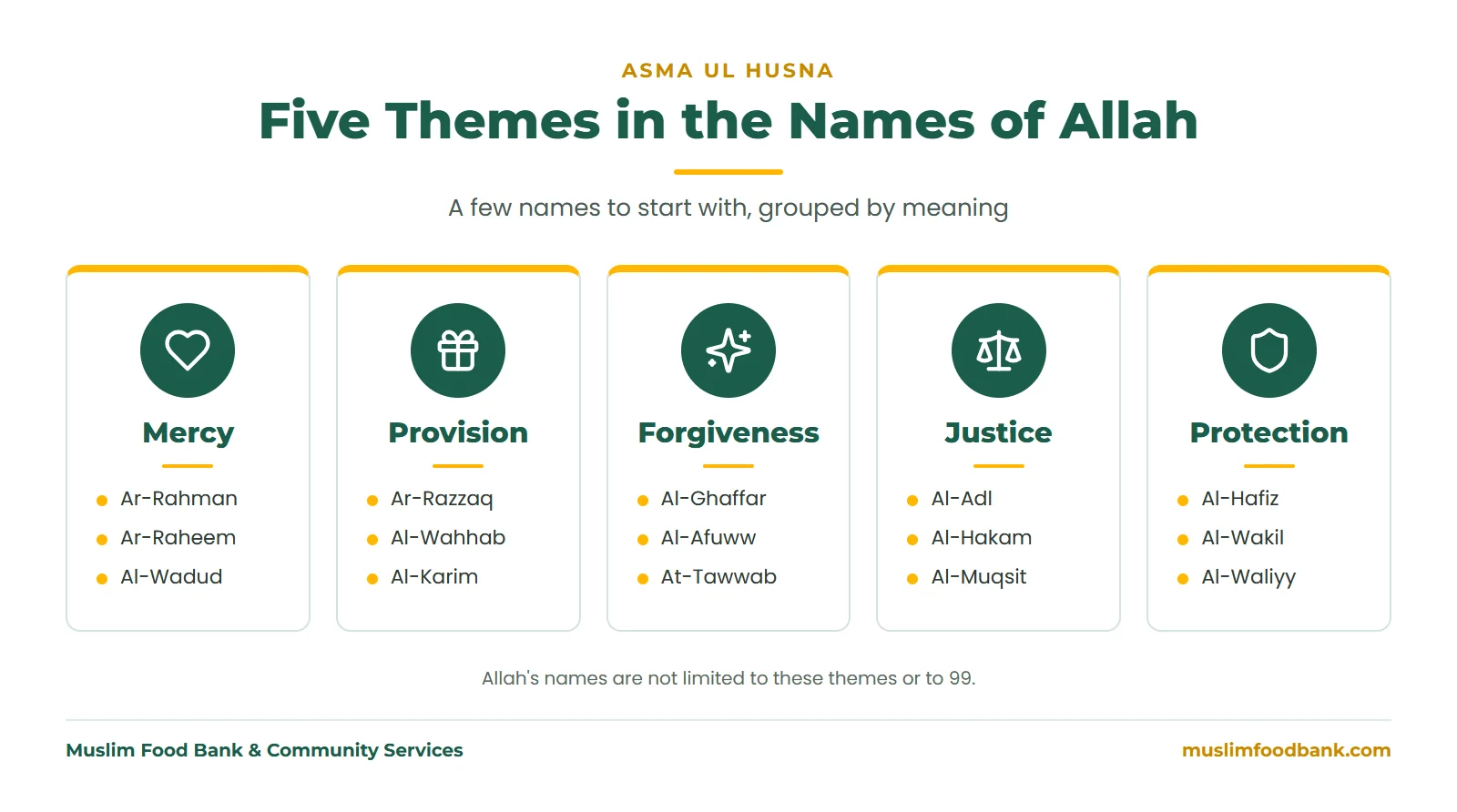
The names help us know who Allah is. When you read them as a group, some themes stand out. Here are five that touch daily life:
- Mercy: Ar-Rahman, Ar-Raheem, Al-Wadud (the Most Loving) and Ar-Ra’uf (the Most Kind) remind us that Allah’s mercy comes before everything.
- Provision: Ar-Razzaq (the Provider), Al-Wahhab (the Giver of Gifts) and Al-Karim (the Most Generous) remind us that every meal and every blessing comes from Him.
- Forgiveness: Al-Ghaffar, Al-Ghafur, Al-Afuww (the Pardoner) and At-Tawwab (the Accepter of Repentance) tell us it is never too late to turn back to Allah.
- Justice: Al-Adl (the Just), Al-Hakam (the Judge) and Al-Muqsit (the Equitable) promise that no wrong is forgotten.
- Protection: Al-Hafiz (the Preserver), Al-Wakil (the Trustee) and Al-Waliyy (the Protecting Friend) give us calm when life feels uncertain.
How Do Muslims Use the 99 Names in Dua and Dhikr?
Calling on Allah by His names is one of the most powerful ways to make dua. The Quran itself shows this. Many verses end with two names that match the topic of the verse, such as “Indeed, Allah is Forgiving and Merciful.”
1. Call on the Name That Fits Your Need
Choose the name that matches what you are asking for. Ask Ar-Razzaq for provision when money is tight. Ask Al-Ghafur for forgiveness when you feel regret. When someone is sick, call on Allah as the Healer, as the Prophet (peace be upon him) did in his dua for the sick (Sahih al-Bukhari). You do not need perfect Arabic. Allah hears every language.
2. Remember Allah After Prayer and in Quiet Moments
Many people say a few names after salah, on the way to work, or before sleep. Saying “Ya Rahman, Ya Raheem” slowly and with attention is a simple form of dhikr (remembrance of Allah).
3. Learn a Few Names at a Time
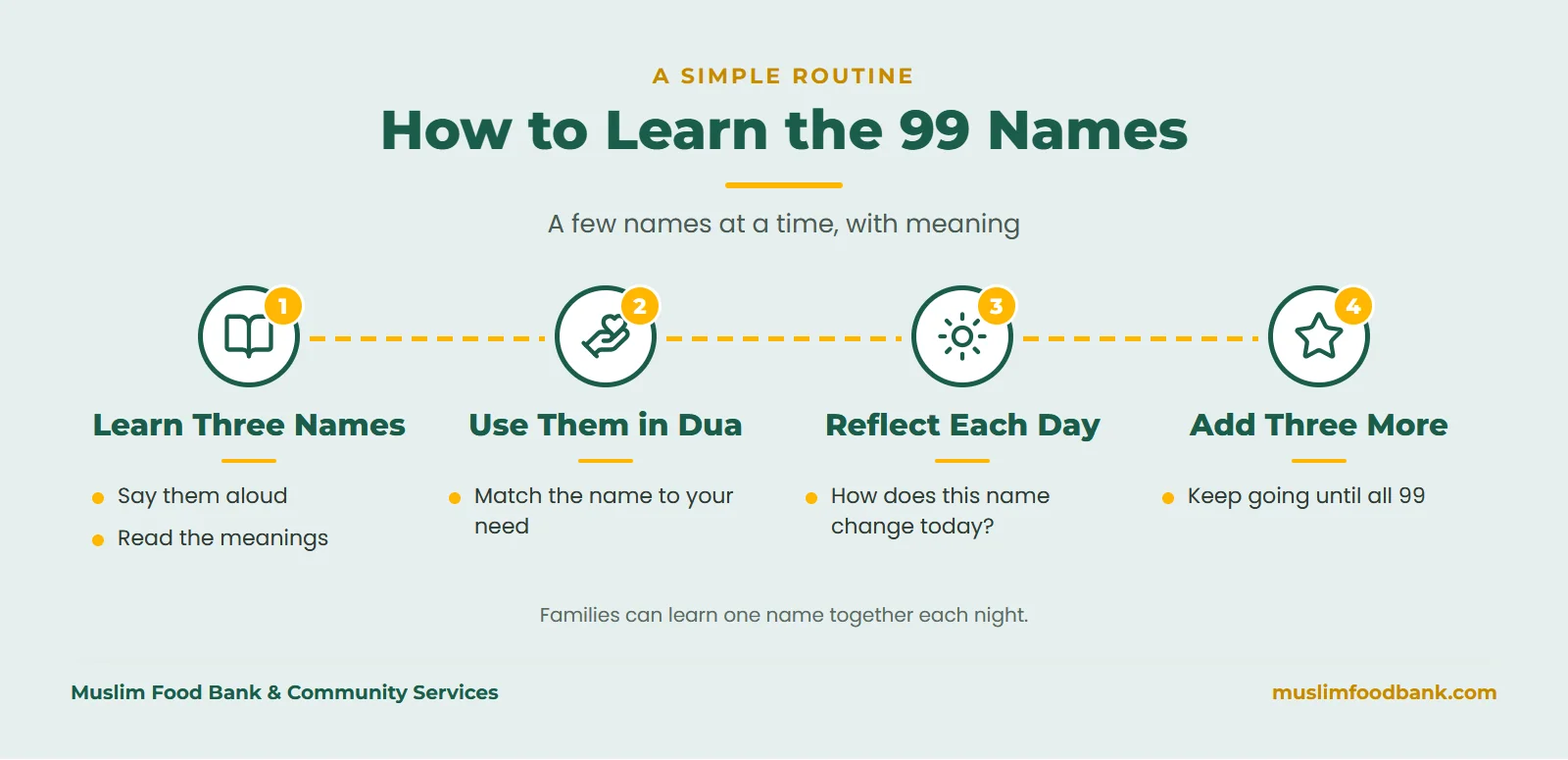
Do not try to learn all 99 in one week. Learn three names, read their meanings, and use them in your dua for a few days. Then add three more. Families can learn one name each night at dinner and talk about what it means.
4. Reflect and Act
Ask yourself one question for each name: “How does this name change the way I live today?” If Allah is Al-Karim, the Most Generous, how can I be more generous? If Allah is As-Sabur, the Most Patient, how can I be more patient with my children?
What Are the Benefits of Learning the Names of Allah?
- A closer relationship with Allah: the more you know Him, the more you love, trust and fear Him in the right way.
- Stronger, more focused dua: you know how to call on Him, just as the Quran teaches.
- Peace in hard times: remembering Al-Wakil and Al-Hafiz helps when life is stressful. The Quran says hearts find rest in the remembrance of Allah (Quran 13:28).
- Better character: the names guide us to be merciful, fair, patient and generous with others.
- The promise of Paradise: the hadith in Sahih al-Bukhari gives glad tidings to those who truly “count” the names.
Living the Names: Mercy and Provision in Action
Only Allah is Ar-Razzaq, the Provider. But He often sends His provision to people through the hands of others. When you give Zakat or Sadaqah, you become a means for a family to receive what Allah has written for them.
That need is real in Canada. According to Food Banks Canada’s HungerCount 2026 report, there were about 2.35 million food bank visits in a single month (March 2026), the highest number ever recorded.
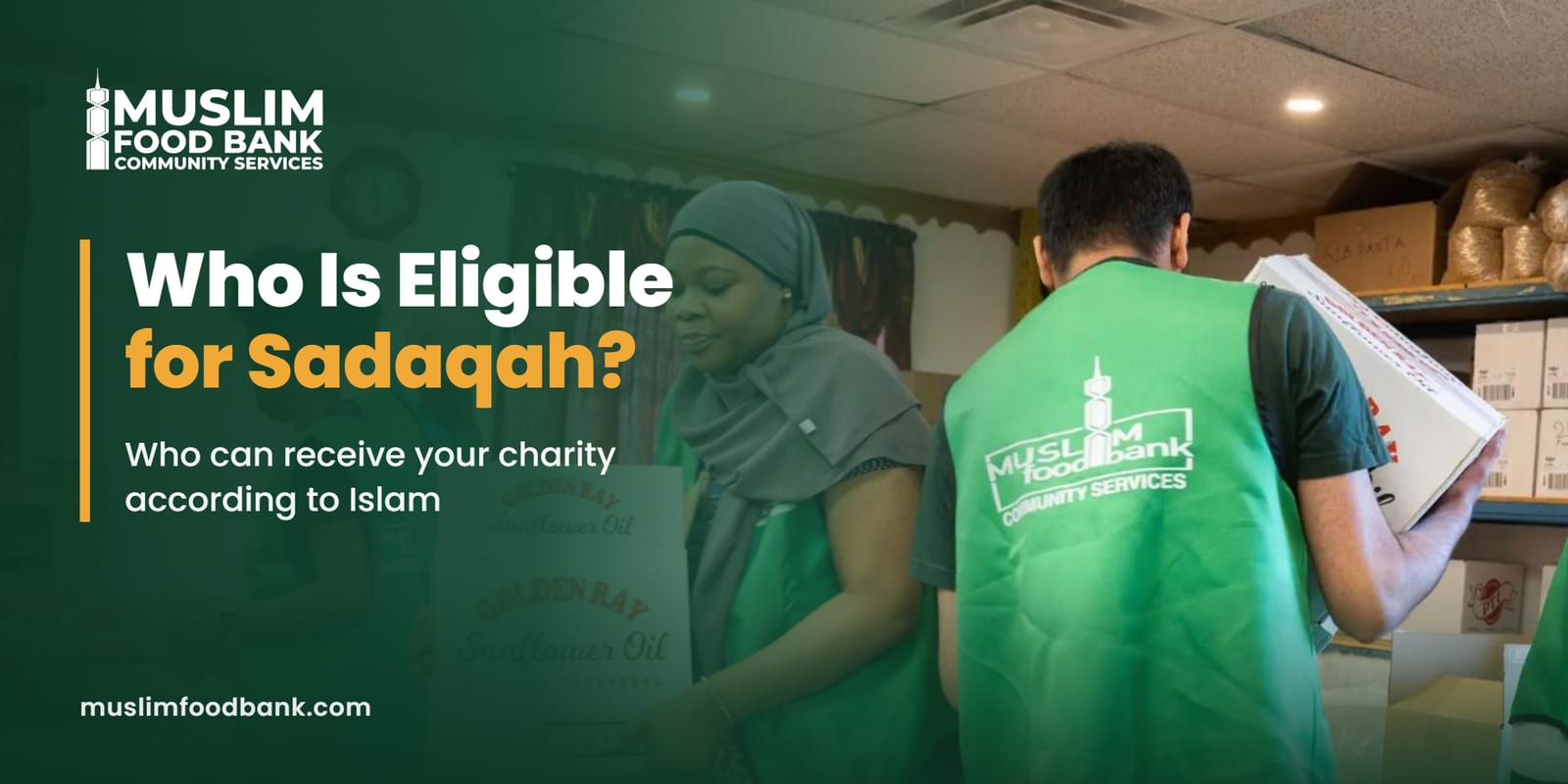
At Muslim Food Bank & Community Services, we serve families with halal food hampers at locations across Canada, together with social services, newcomer support and programs for seniors and youth. You can read more about how we help. Your giving, and your time as a volunteer, turns the meaning of Ar-Rahman and Al-Karim into a meal on someone’s table.
If you want to learn more about giving in Islam, read our guide on why charity is so important in Islam.
Share the Mercy of Ar-Rahman
Help a family in need put halal food on the table. Your Sadaqah reaches neighbours across Canada through our food banks and community programs.
Frequently Asked Questions About the 99 Names of Allah
What are the 99 names of Allah called?
They are called Asma ul Husna, which means “the most beautiful names.” The phrase comes from the Quran, which says that the best names belong to Allah and asks believers to call on Him by them (Quran 7:180). Each name describes one of Allah’s perfect qualities, such as His mercy, knowledge, justice or generosity.
Does Allah have only 99 names?
No. Scholars agree that Allah’s names are not limited to 99. The hadith in Sahih al-Bukhari and Sahih Muslim speaks of 99 names with a special reward for those who learn them and live by them. In another dua, the Prophet (peace be upon him) mentioned names that Allah has kept in His knowledge of the unseen, so there are more than 99.
What is the reward for memorizing the 99 names of Allah?
The Prophet (peace be upon him) said that whoever “counts” the 99 names will enter Paradise (Sahih al-Bukhari 7392, Sahih Muslim 2677). Scholars explain that counting them means memorizing them, understanding their meanings, calling on Allah by them and letting them shape your character. Reciting the list is a good start, and the full promise is tied to living by the names.
Which is the greatest name of Allah?
Scholars differ on which name is Allah’s greatest name (al-Ism al-A’zam). Many say it is the name “Allah” itself, because it holds the meanings of all His other names. Others point to Al-Hayy Al-Qayyum (the Ever-Living, the Self-Sustaining), based on hadith about Ayat al-Kursi and similar verses. Every name of Allah is great, so call on Him with any of them.
Can I name my child with one of the names of Allah?
Some names belong to Allah alone, such as Allah, Ar-Rahman and Al-Khaliq. For these, Muslims add “Abd” (servant of) before the name, as in Abdur-Rahman or Abdul-Khaliq. Other words, like Ali, Karim or Rashid, can also describe people, and many Muslims carry them as names. If you are unsure about a specific name, ask your local imam.
How can I memorize the 99 names of Allah?
Learn a few names at a time. Pick three names, learn their meanings, and use them in your dua for a few days before adding more. Listening to a recitation, writing the names in a notebook and learning one name each night with your family also help. Many people learn all 99 within a few months this way.
Final Thoughts
The 99 Names of Allah are an open door to knowing your Creator. Start small. Learn one or two names this week, call on Allah by them in your dua, and let their meaning show in how you treat others. Over time, these beautiful names can change how you pray, how you think about hardship and how you care for the people around you.